When you bring a new puppy home, there’s often a sort of uneasy uncertainty hanging over you. One week, you think they’ve outgrown their bed, the next, they look oddly the same, just clumsier, but still the same little bundle of energy.
Many dog owners find themselves staring at paws, ears, and legs, wondering what on earth is going on. It’s a feeling that’s very normal when you bring a new puppy home. Puppies just seem to grow in these weird little bursts, pauses, and awkward sideways stages that don’t make any sense.
But understanding these growth stages actually helps. It gives you a bit of a framework to put all these changes, like fluctuations in appetite, or all those awkward wobbly movements, or that sudden weight gain, into context. And with that framework, everyday decisions become a whole lot easier, from figuring out what food portions to give them to deciding on an exercise routine.
And, of course, the breed of your puppy plays a massive role in all of this, too, as a Chihuahua and a Great Dane don’t grow at the same rate even during the early stages of puppyhood.
This article walks through puppy growth stages, age-based timelines, breed differences, and how to use a puppy growth chart without treating it like a rigid rulebook.
You Might Also Like: Low-Maintenance Pets Perfect for First-Time Pet Owners
How Fast Do Puppies Grow?
The early weeks move quickly, sometimes too quickly to notice.
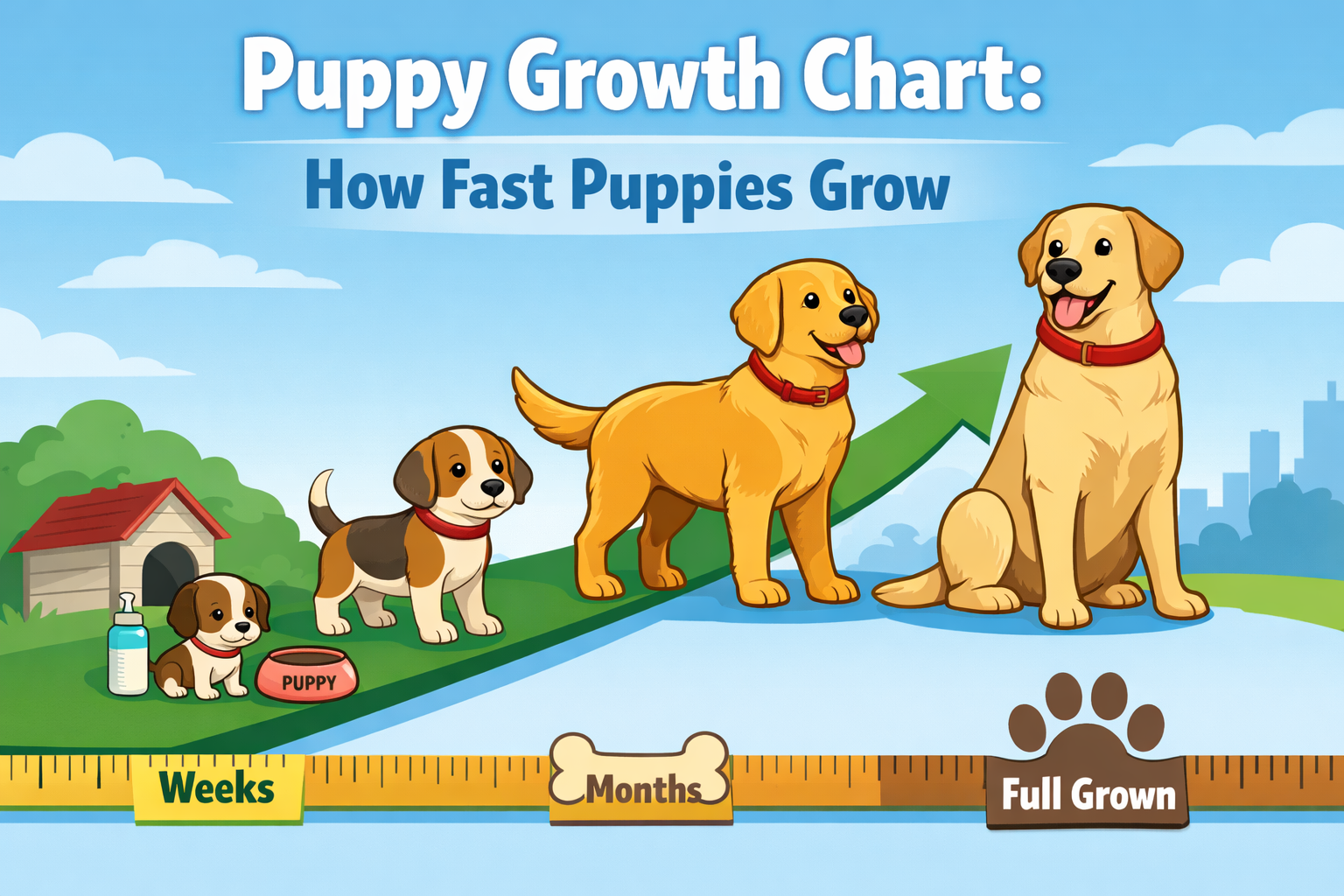
During the first eight weeks, growth is dramatic. Puppies double and triple their birth weight, mostly driven by nursing and basic development. Coordination is minimal, sleep dominates the day, and physical change feels constant.
Between two and six months, growth becomes more visible. Legs shoot up, chests broaden, and appetites spike almost overnight. This is often the stage where owners really feel how fast do puppies grow, because the changes happen week by week, sometimes even faster than their gear can keep up.
Between six to twelve months, puppies grow more slowly, and the changes are easier to overlook. Some get taller without gaining much weight, while others fill out and get broader at their own speed. Owners often think growth has stopped, only to notice subtle changes later.
Several factors shape this pace:
- Breed size
- Genetics
- Nutrition quality and portion control
- Desexing timing
- Exercise habits and intensity
No two puppies respond to these factors in exactly the same way.
Puppy Growth Chart by Age (Birth to Adulthood)
Puppy Growth Timeline Overview
- Newborn to 8 weeks
Rapid weight gain, minimal height, and early muscle formation. - 2-4 months
Noticeable height increase, baby teeth, rising energy. - 4-6 months
Lean appearance, fast skeletal growth, and coordination improve. - 6-9 months
Growth slows, muscle begins developing, and some breeds plateau. - 9-12 months
Small and medium breeds reach adult height. - 12-24 months (large breeds)
Continued filling out, bone density, and joint maturity.
A breed dog size chart adds clarity here, especially for first-time owners.
You Might Also Like: Pet Insurance Costs
What Age Is a Dog Fully Grown?
This question sounds simple, but the answer rarely is. Physical growth and mental maturity operate on separate timelines.
Physically, dogs stop growing once growth plates close. This varies by size and breed. Mentally, many dogs remain puppy-like well after their bodies mature.
Clear signs include stable weight, no height change over several months, and the appearance of an adult coat. These signals help answer what age is a dog fully grown, though exact timing still varies.
When Do Dogs Stop Growing? (By Size)
-
When Do Small Dogs Stop Growing?
Small breeds often reach adult size between 8-12 months. Many owners notice sudden maturity that feels almost abrupt. This is when they begin to wonder when do small dogs stop growing, especially when those quick changes slow down almost overnight.
-
When Do Medium Dogs Stop Growing?
Medium breeds usually finish between 12-15 months. Growth slows gradually rather than completely stopping overnight.
-
When Do Large Dogs Stop Growing?
Large breeds tend to grow until 15–18 months, sometimes longer. The answer to what age dogs stop growing usually comes down to breed size, with height often levelling off before weight and overall maturity catch up later.
-
When Do Giant Dogs Stop Growing?
Giant breeds continue to develop for up to 24 months, with bone and joint health becoming especially important during this stage. This extended timeline often raises the question of when do dogs stop growing.
When Is a Female Dog Fully Grown?
Female dogs often mature slightly earlier than males of the same breed. Hormonal differences influence growth plate closure and body composition. Desexing timing can also affect height and weight distribution.
Size differences between male and female dogs are modest. This context helps owners understand when a female dog is fully grown without assuming uniform outcomes.
Breed Dog Size Chart (Growth by Breed Type)
Breed categories explain growth expectations better than age alone.
| Breed Type | Breed | Typical Adult Weight | Typical Adult Height |
| Toy & Small Breeds | Chihuahua | 1.5–3 kg | 15–23 cm |
| Pomeranian | 1.8–3.5 kg | 18–24 cm | |
| Dachshund | 7–14 kg | 20–23 cm | |
| Medium Breeds | Cocker Spaniel | 12–15 kg | 38–41 cm |
| Staffy | 13–17 kg | 35–40 cm | |
| Border Collie | 14–20 kg | 46–56 cm | |
| Large Breeds | Labrador | 25–36 kg | 55–62 cm |
| Golden Retriever | 25–34 kg | 51–61 cm | |
| Giant Breeds | Great Dane | 45–90 kg | 71–86 cm |
| Mastiff | 54–100 kg | 70–76 cm |
When Are Border Collies Fully Grown?
Border Collies often reach adult height by 12 months, though their weight and muscle mass continue to develop afterward. Mental maturity lags behind physical growth, which surprises many owners.
Questions like when are border collies fully grown usually stem from this mismatch between body and behaviour.
Why Puppy Growth Charts Matter
Growth charts can help you avoid overfeeding, which often happens during periods of rapid growth. They also protect joints by encouraging you to hold off on too much exercise early on.
Most importantly, growth charts help set realistic expectations, so growth is something you can track instead of worrying about.
Common Puppy Growth Myths
Having big paws does not always mean a puppy will grow into a large dog. Puppies, even from the same litter, grow at different rates. Some dogs keep growing in small ways after their first year, so not all dogs are fully grown by twelve months.
Tips to Support Healthy Puppy Growth
Feed your puppy based on its age and stage of development, not just on appetite alone. Pick food that fits your puppy’s breed size. Exercise should help your puppy build coordination and move well, not tire it out. Regular vet checkups can help spot any growth-related issues early.
Frequently Asked Questions About Puppy Growth
How fast do puppies grow in the first 6 months?
The first 6 months bring the most visible change. Puppies gain height quickly during this stage, with bones lengthening faster than muscles can keep up, which explains that lanky, awkward look many owners notice.
Can puppies grow after 1 year?
Yes, growth doesn’t always stop at the one-year mark. Large and giant dog breeds often keep filling out after this age, even if you do not notice much change in their height.
Do dogs grow taller after 12 months?
Some dogs do keep growing, but the change is usually small. This is more common in larger breeds, where their final height is reached later than many people expect.
When should I switch to adult dog food?
The right time depends on your dog’s breed size and how quickly it matures. Smaller breeds transition earlier, while larger dogs benefit from staying on puppy food longer, with a vet offering the clearest guidance.
Conclusion
Puppies don’t all grow the same way. Growth charts can help, but they aren’t always exact. Every dog grows at its own speed, depending on genetics, care, and time. Understanding these growth stages can make things easier, even when surprises arise along the way.
Looking for trusted care while your puppy grows?
At Happy House Sitters, we connect you with reliable, experienced pet sitters who understand dogs at every life stage, from playful puppies to settled adults. Whether you’re planning a short trip or an extended break, your dog stays comfortable at home with care you can trust.
Call us today on 0425 722 184 and arrange support that fits your dog’s routine, not the other way around.